
What Is a Cover Bet? Horse Racing Cover Bet Explained
Cover bets are a common feature in horse racing, offering a way to place more than one selection in a single wager. In this blog post, we will explore how cover bets work, show practical examples, and highlight options for placing them.
We will also explain how to place a cover bet and provide information that might be of use to you if you choose to place one.
By the end, you should have a clearer understanding of cover bets and how they fit into horse racing betting.
What Is a Cover Bet?
A cover bet is a type of wager where a bettor’s stake is spread across different possible outcomes rather than focusing on just one. Instead of putting all their stake on a single result, a cover bet allows a bettor’s selection to return something if it performs within a certain range.
There are several variations, which can affect how a bettor’s stake is divided and which outcomes might produce a return. Two commonly mentioned examples are each-way bets and place-only bets.
Each-way bets are designed so that part of a bettor’s stake is linked to their chosen horse winning, and the other part is tied to it finishing in a top position. This means that even if the bettor’s horse doesn’t come first, they might still receive a payout.
Place-only bets, on the other hand, only pay out if a bettor’s horse finishes within a certain placing. Their selection does not need to win outright, but it must meet the conditions set by the bookmaker.
Overall, cover bets are a way to spread selections across multiple outcomes. This approach might increase the chance of seeing a potential return from a wager, which is why many people find them appealing.
3 Places Horse Racing Cover Bet Example
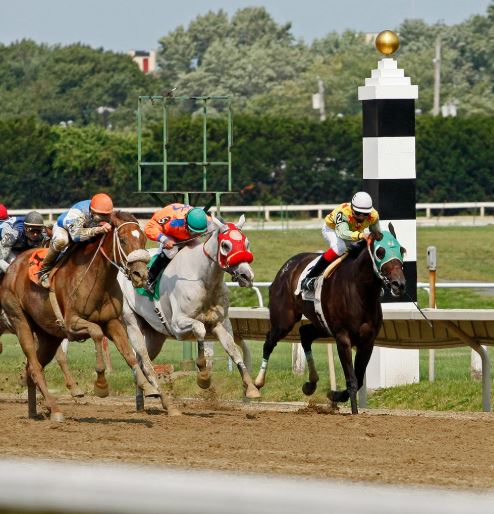
Imagine you want to place a cover bet on a race with an option that covers three positions. In this scenario, your bet might pay out if your horse finishes first, second, or third.
For example, suppose you place a £10 each-way cover bet on a horse at 5/1. Your total stake would be £20—£10 on the horse to win and £10 on the horse to place.
If your horse finishes first, both parts of the bet return money. The win portion would return £60 (£10 stake plus £50 winnings), while the place portion typically pays a fraction of the win odds, often around one-fifth. In this case, that would return £12 (£10 stake plus £2 winnings).
Note that the exact fraction depends on the race type, the number of runners, and the bookmaker’s rules. In most UK races, one-fifth is standard for many races, but it may be one-quarter or one-third in smaller fields.
If the horse finishes second or third, only the place portion pays out, giving £12. This example assumes the bookmaker returns both the stake and winnings, as is standard in the UK. Some bookmakers or betting formats may treat stakes differently, so always check the terms before placing your bet.
A three-places cover bet might increase the chance of seeing a return compared with backing a horse solely to win, offering a more flexible way to make a selection.

Cover Bet Strategy Explained
Understanding the approach behind cover bets might help you consider horse racing wagers more thoughtfully. The key idea is to spread your stake across different outcomes. Instead of backing a single horse to win, you might also cover positions that are likely but not guaranteed to come first.
A popular example is the each-way bet. Here, half of the stake goes on the horse to win and the other half on it to place. That way, even if the horse does not finish first, there is still a chance of a return if it performs well enough.
The odds of a horse might influence the potential payout. Higher odds offer bigger potential returns, but they are often associated with less likely outcomes. Some bettors prefer to place cover bets in races where there is a favourite but also strong competition from other runners. In such cases, backing a horse that might not win outright but could place gives a potential return on more than one outcome.
Research might also help. Examining the form of the horses, the track, and the experience of the jockeys might improve your understanding of potential outcomes. That said, anything can happen during a race, so no bet is guaranteed to pay out.
It is also worth keeping track of your funds. Avoid staking large amounts on a single wager. Spreading bets thoughtfully and monitoring your budget might help ensure that betting remains an occasional form of entertainment.
How To Place a Cover Bet
If you’re interested in placing a cover bet, it is typically straightforward. Start by selecting the race you want to back.
Next, choose the type of cover bet you want to place. Each-way bets are a common option because they split your stake between a win and a place, covering multiple possibilities.
Once you have picked your horse, visit your bookmaker’s website or app. Locate the race and select the horse. You will see options for different types of wagers – select “each-way” or “place” according to your approach. Enter your stake, remembering that each-way bets require double the amount: half on the horse to win and half on it to place.
Check the odds and potential returns, then confirm your bet. After that, all that is left is to watch the race unfold.
Always gamble responsibly. Only stake what you can afford to lose, set personal limits, and take breaks from betting. Treat it as a form of entertainment rather than something central to your finances.
If gambling starts to affect your well-being or finances, seek support immediately. Organisations such as GamCare and GambleAware offer free, confidential advice and assistance.
**The information provided in this blog is intended for educational purposes and should not be construed as betting advice or a guarantee of success. Always gamble responsibly.
