
How Do Bookies Set Odds?
Odds are a core part of sports betting. But how do bookies set odds?
Understanding how odds work can help you better understand how betting works, whether you’re new to sports betting or have been placing bets for a while.
Do Bookies Make Their Own Odds?
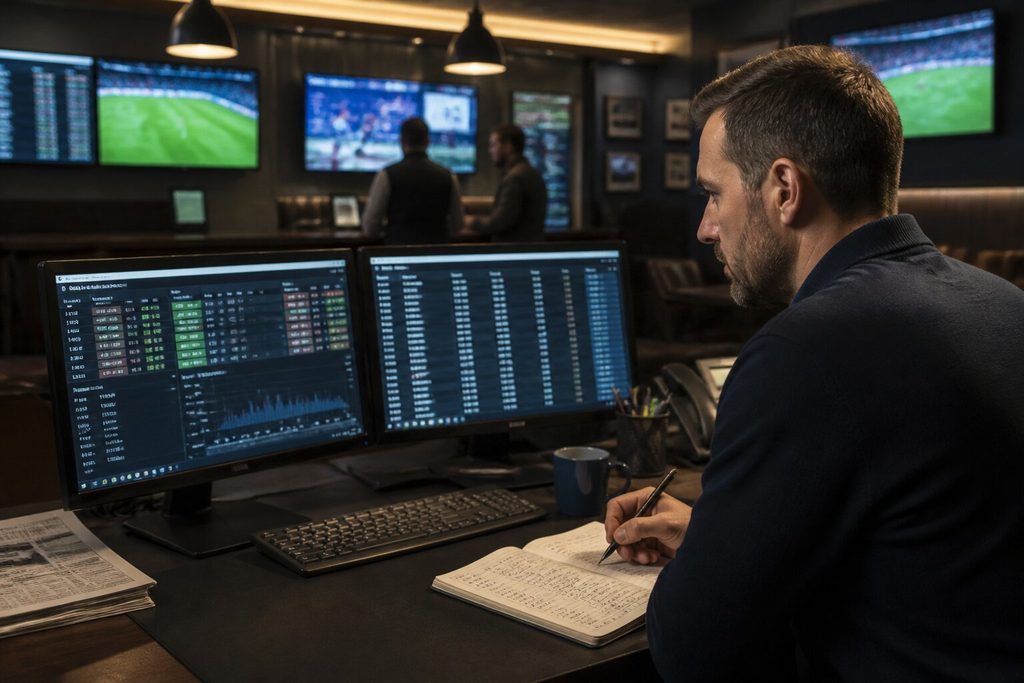
Primarily, bookies set their own odds, but it is not a straightforward task. They employ teams of expert analysts, often called traders, who typically have strong backgrounds in mathematics and statistics.
These experts study large amounts of data related to the event you are betting on, including team performance and weather conditions. They use that information to estimate the probability of different outcomes.
Bookies also use advanced computer algorithms to assist in setting odds. These systems quickly analyse historical data and current statistics to calculate likely outcomes and to support the traders’ decisions.
The overall aim is to reflect probable results while ensuring the bookmaker remains profitable. To manage risk, bookies continuously monitor the betting market and public opinion.
If many people back one outcome, bookmakers will adjust the odds to balance potential payout risk. This combination of human expertise, technology and market observation keeps the odds well considered and up to date.
Understanding this process can give you clearer insight into the odds you see when placing a bet.
How Are Odds Determined in Sports Betting?
In sports betting, odds show both the probability of an event happening and the potential return if your bet wins. Bookmakers combine data and expert judgement to set those odds.
They start by gathering all relevant information. This includes team and player statistics, recent form, injuries and suspensions, and conditions such as weather or the pitch. Each factor can influence the likely outcome and is considered.
Expert analysts and computer algorithms then work together. Analysts apply experience and contextual knowledge, while algorithms process large volumes of data to spot patterns and quantify probabilities.
Once probabilities are estimated, bookmakers convert them into odds. They also build a margin into the odds to cover liabilities and to help ensure the bookmaker remains profitable over time.
Market activity and public opinion affect odds as well. If many customers back one outcome, bookmakers may shorten those odds to manage risk and to encourage more balanced betting on both sides.
Understanding these elements can help you make more informed choices when placing bets on Bet442 or any other platform.


























































Can Odds Change After You Bet?
When you place a bet, the odds shown at that moment are usually the ones you receive if your wager wins. These are called “fixed odds“, which means they are set when your bet is confirmed and do not change for that bet.
There are situations where adjustments can happen after you place a bet. For example, if a bookmaker experiences a technical error or accidentally offers substantially inflated odds, they may correct the mistake.
Corrections can take the form of changing the odds to a more appropriate level or, in some cases, voiding the bet. Bookmakers can change odds after a bet is placed to protect the fairness and integrity of the betting market.
Such occurrences are uncommon, but it is useful to know these policies exist. Check the terms and conditions of the bookmaker you use to understand how they handle these situations.
How Accurate Are Bookies’ Odds?
Bookmakers combine expert knowledge, detailed statistics and advanced algorithms to predict outcomes. This blend helps them set odds that reflect the most likely results.
Even so, odds are not infallible. Unexpected injuries, sudden weather changes or an unpredicted team performance can all affect an event’s outcome.
Bookmakers also include a profit margin, which shifts the odds slightly in their favour. That means the prices are estimates rather than guarantees.
Odds therefore provide a well-informed estimate, but an element of unpredictability always remains. Please gamble responsibly.
**The information provided in this blog is intended for educational purposes and should not be construed as betting advice or a guarantee of success. Always gamble responsibly.