
How Many Legs To Win a Set In Darts?
Darts is a widely enjoyed game, whether played casually with friends at the pub or followed closely at the highest professional level. For those new to the sport, or even regular viewers, the structure of matches can sometimes be confusing. A common question is: how many legs are needed to win a set in darts?
This blog post explains how legs and sets work in darts, how many legs are required to win a set, and how this format is used in major tournaments such as the World Championship. By the end, you’ll have a clearer understanding of how darts matches are organised and what’s at stake as players compete.
Read on to learn more.
What Are Sets and Legs In Darts?
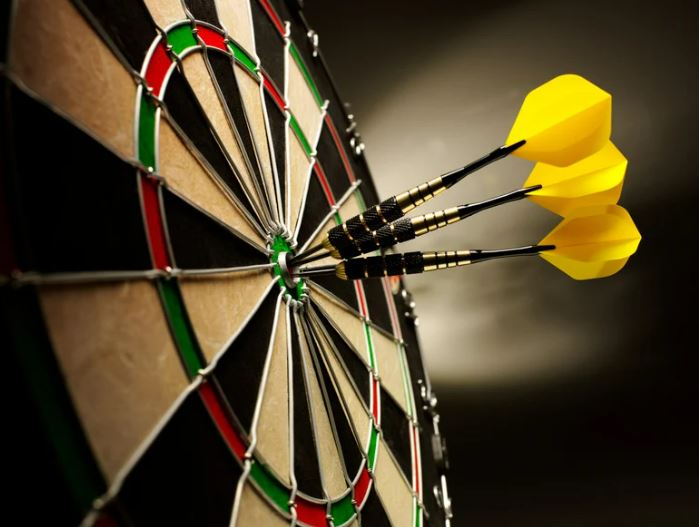
In darts, matches are divided into smaller parts that help define progress and scoring. Two key terms are used to describe these parts: “legs” and “sets”. At a basic level, legs act as individual scoring contests, while sets group several of these contests together.
A leg is the most basic unit of play. If you choose to play a standard game of darts, you will usually focus on winning one leg at a time. Each leg has a clear beginning and a clear end, and one player always emerges as the winner of that leg.
Legs are intentionally brief, especially at professional level. This keeps matches engaging and allows multiple turning points to develop within a single contest.
A set sits above the leg. Rather than being decided by just one leg, a set requires a player to collect a certain number of leg wins. The exact target is decided by the competition rules and remains the same for both players.
At this stage, it is enough to know that legs feed into sets, and sets feed into matches. The finer details of how many legs are needed, and how this affects tactics, are explored in the next section.
Understanding this relationship helps if you are watching darts, attending a live event, or if you choose to play competitively yourself.
How Many Legs To Win a Set In Darts?
There is no single answer that applies to every darts match. The number of legs needed to win a set depends on the competition, the level of play, and the organisers’ chosen format. Informal games, such as pub matches, often skip sets altogether and focus only on legs. Professional events, by contrast, frequently use sets to divide matches into clear phases.
The most common professional format is best of five legs per set. In this case, a player must win three legs to take the set. This allows room for swings in performance without dragging the set out too far.
Some competitions use best of three legs per set, meaning two leg wins are enough. This version leaves less time for recovery if a player starts poorly, which may lead to surprising results.
There are also well-known tournaments that do not use sets at all. Many PDC floor events, for example, are decided purely on a fixed number of legs, such as best of 11. These matches may feel different to watch, even though the same 501 scoring system is used.
One additional detail worth noting is the throwing order. The player who starts a leg often has an edge, and this starting throw usually alternates across legs. Over the course of a set, this sharing of the opening throw helps keep competition even.
So, while “three legs to win a set” is the answer most people give, it is always wise to check the rules of the specific event you are following or taking part in.

World Championship
The PDC World Darts Championship offers a clear example of how sets and legs operate at the highest level.
At this tournament, each set follows the familiar best-of-five-legs format. A player must claim three legs to secure the set, with every leg played using the standard 501 double-out rules. If you are watching closely, you will see how small moments within individual legs may decide the fate of an entire set.
Although the leg requirement stays the same throughout the event, the number of sets needed to win a match increases round by round. Early matches are shorter, while later stages demand success across many sets. This places heavy demands on accuracy, focus, and endurance over extended sessions.
This expanding match length is a defining feature of the World Championship. A single strong spell may win a set, yet winning the title requires sustained excellence across multiple days of play.
The set-based format also allows matches to swing dramatically. A player might fall behind early, recover across later sets, and still emerge victorious. These shifts are a major reason the tournament attracts such strong interest each year.
It is also worth remembering that not every major darts event follows this approach. Competitions such as the Premier League and the World Matchplay rely solely on legs, which may catch new viewers off guard.
Finally, some fans choose to engage with betting markets linked to darts. If you choose to place a bet, treat it as optional entertainment and nothing more. Set personal spending limits, take regular breaks, and avoid chasing losses.
If gambling begins to cause harm to your finances or wellbeing, seek help promptly. Organisations such as GamCare and GambleAware provide free, confidential support for anyone who needs it.
Bet on Darts Online at Bet442
At Bet442, we give you the option to bet on a wide range of darts players and matches, whether you’re following major tournaments like the PDC World Championship or keeping an eye on other key events throughout the season. We’ve designed our site to be straightforward to use, so you can find the markets you’re interested in without unnecessary steps.
Getting started is simple. You can create an account, make a deposit, and place your bets in just a few steps. We offer a selection of payment options and access to customer support if you need help along the way. We are a licensed and regulated by the UK Gambling Commission (UKGC), which means we operate under established standards for fairness and player protection.
If you like to follow matches as they happen, live betting allows you to place bets while play is ongoing, reflecting how the match develops from throw to throw.
We also recognise that betting should be treated thoughtfully. On our site, you’ll find responsible gambling tools such as deposit limits, time-outs, and self-exclusion options, which are there to help you manage how and when you take part.
If this sounds good to you, feel free to make an account at Bet442, deposit some funds to play with and explore our darts betting markets and learn more about what’s available.
**The information provided in this blog is intended for educational purposes and should not be construed as betting advice or a guarantee of success. Always gamble responsibly.